

Fyodor Lukyanov

Fyodor Lukyanov is one of the most prominent Russian experts in the field of international relations and foreign policy. He has worked in journalism since 1990 and is the author of numerous publications on modern international relations and Russian foreign policy.
Since 2002, he has been the editor-in-chief of Russia in Global Affairs – a magazine conceived as a platform for dialogue and debate among foreign and Russian experts and policymakers.
In 2012, he was elected Chairman of the Presidium of the Council on Foreign and Defense Policy of Russia, one of the oldest Russian NGOs. Since 2015, he has been the Director for Scientific Work of the Foundation for Development and Support of the Valdai International Discussion Club.
He works as a research professor at the Faculty of World Economy and Global Politics at the National Research University Higher School of Economics.
Follow him on Telegram and read Russia in Global Affairs.
One year after Hamas’ infamous attack on Israel, the Middle East seems to have returned to its eternal state: a hotbed of acute conflict, with waves of tension. Outside observers can only look on in horror, while experts shrug their shoulders. That’s how it was, that’s how it will be. How is the current crisis different from previous ones in the region, you might ask? Well, without pretending to have a deep understanding, let us note what is striking from the outside.
Patron-client relationships are changing, both between regional powers and major external actors. The most obvious is the status of the United States. The current White House administration does not have a clear and consistent line; it’s just plugging holes and putting out new fires. The US does not need high-profile events in the Middle East right now, its priorities are different. Contacts with key players are inconsistent, and relations with the Gulf monarchies, and even more so with Iran, are volatile. But Washington’s actions are based on a fundamental contradiction that cannot be resolved, and it has to do with Israel.
Ideologically, the current Israeli leadership is not at all close to President Joe Biden’s team. Meanwhile, Prime Minister Benjamin Netanyahu is rather unpopular. Diplomatic efforts are apparently being made to limit the scope of military action, which Israel does not agree with. At the same time, the Biden administration continues to provide military aid, because for America the Israeli factor is not a foreign but primarily a domestic phenomenon. All the more so at a crucial stage of the election campaign. As a result, the Israeli leadership, convinced that the US cannot pull the plug, decides on its own how to act, sometimes informing its American ally, sometimes “forgetting” to do so. The change to a relationship that was once considered more or less hierarchical is also evident on the other side.
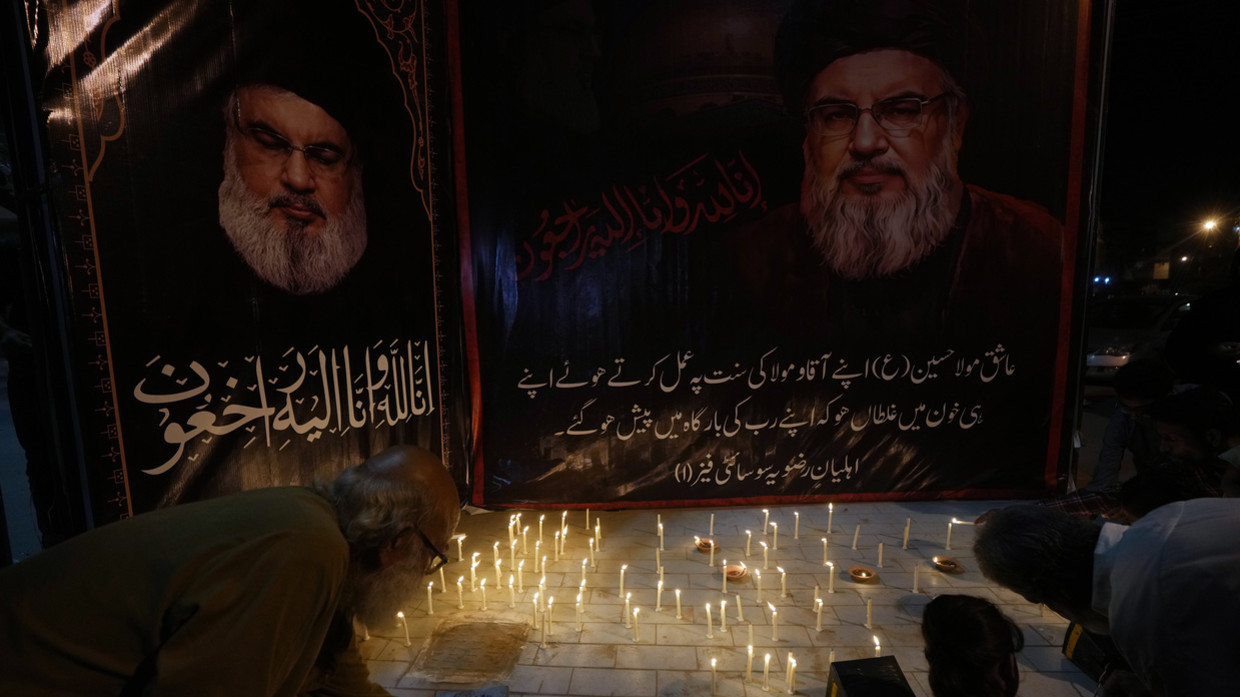
Iran’s influence across the region has grown enormously in the 20 years since the US destroyed Saddam’s Iraq as its main counterweight and generally stirred up the Middle East. To its credit, Tehran has skilfully seized the opportunities and significantly strengthened its position, while skilfully avoiding direct conflict. The situation for Iran remained difficult, especially when Trump torpedoed the nuclear deal on the one hand and eagerly embarked on a separate arrangement between Israel and the leading Arab countries on the other. Nevertheless, Tehran’s weight and influence cannot be denied, especially through its network of regional partner organisations of other Shiites and their sympathisers.
Israel is now launching powerful strikes against this entire apparatus with the aim of weakening it as much as possible, if not destroying it (which is hardly possible), and removing its ability to pose a threat for several years to come. Iran will thus be deprived of its most effective tools and will find itself in a position where it will be impossible not to respond. But Tehran is aware of this tactic and hides rather modest practical steps behind formidable rhetoric.
Nevertheless, prestige is also an issue. Other regional powers either confine themselves to very strong public admonishment, like the Turkish president, or show a high degree of concern, like the Arab Gulf states, or are primarily worried about ensuring that the chaos does not spread to them (Egypt, Jordan).
Returning to the external actors, their presence in the conflict area is not very visible. The European Union is not a presence at all. Even if the situation leads to new refugee flows that will directly affect the Old World, the efforts will most likely be aimed at preventing them from entering the bloc and nothing more.
Russia obviously has other priorities at the moment and is trying to promote some diplomacy where it can, but let’s face it, the demand for this is minimal. The region is teetering on the brink of all-out war, but paradoxically, judging by events, no one wants it. All players hope to walk the tightrope without losing control through escalation. There is no denying the skill of the participants, but it is becoming increasingly easy to fall off.
This article was first published by the newspaper Rossiyskaya Gazeta and was translated and edited by the RT team
Counter Information publish all articles following the Creative Commons rule creative commons. If you don't want your article to appear in this blog email me and I will remove it asap.


No comments:
Post a Comment